How to Set Up Your Roofing CRM So No Lead Falls Through the Cracks
- The Organized Contractor Co.

- Jan 26
- 6 min read
You wouldn't bench press 300 pounds without a spotter. So why are you running a roofing business without a safety net for your leads?
Every contractor has experienced it: a lead comes in, you get busy on a job site, and three days later you realize nobody followed up. That prospect already signed with your competitor down the street. It's not a character flaw. It's a systems problem.
Your contractor CRM setup is supposed to be your spotter, the thing that catches leads when you're under the bar and can't get to them yourself. But most roofing contractors either don't have a CRM, have one they barely use, or set it up wrong from day one.
Let's fix that. Here's how to set up your roofing CRM so no lead ever falls through the cracks again.
Why Leads Fall Through the Cracks (It's Not What You Think)
Most contractors blame their team: "My sales guy dropped the ball." "The office forgot to call them back."
But here's the truth: your people aren't the problem. Your system is.
Leads fall through the cracks for three reasons:
No defined workflow. Nobody knows who owns the lead or what the next step is.
No automation. Everything depends on someone remembering to do something.
No visibility. You can't manage what you can't see.
Think of it like training without a program. You walk into the gym, do whatever feels right, skip leg day, and wonder why you're not making progress. Your contractor workflow needs structure, reps, sets, and a plan.
[OWNER NOTE]: If you're constantly asking "Did anyone call that lead back?" the answer isn't more meetings. It's a CRM that removes the guesswork.
Your CRM Is Your Spotter (Not Just a Database)
A lot of contractors think a CRM is just a fancy contact list. It's not.
A properly configured roofing CRM is your spotter. It's there to:
Catch leads when they come in (even at 2 AM)
Remind your team when follow-ups are due
Alert you when something stalls in the pipeline
Automate the boring stuff so your team can focus on selling
The goal isn't to replace your people. The goal is to make sure the system does the remembering so your team can do the selling.
Step 1: Set Up Your Lead Capture (Every Rep Starts Here)
Before you can work a lead, you have to capture it. Your CRM needs to be the single point of entry for every lead, no exceptions.
What to configure:
Web form integration. Every form on your website should push directly into your CRM.
Phone tracking. Use a tracked number that logs calls and creates a contact automatically.
Manual entry protocol. If someone takes a call or meets a prospect at a home show, there's one place it goes: the CRM.
The rule: If it's not in the CRM, it doesn't exist.
[OPS NOTE]: Create a simple "New Lead" checklist that your team follows for every entry. Required fields should include: name, phone, email, address, lead source, and next scheduled action.
Step 2: Build Your Pipeline Stages (The Workout Plan)
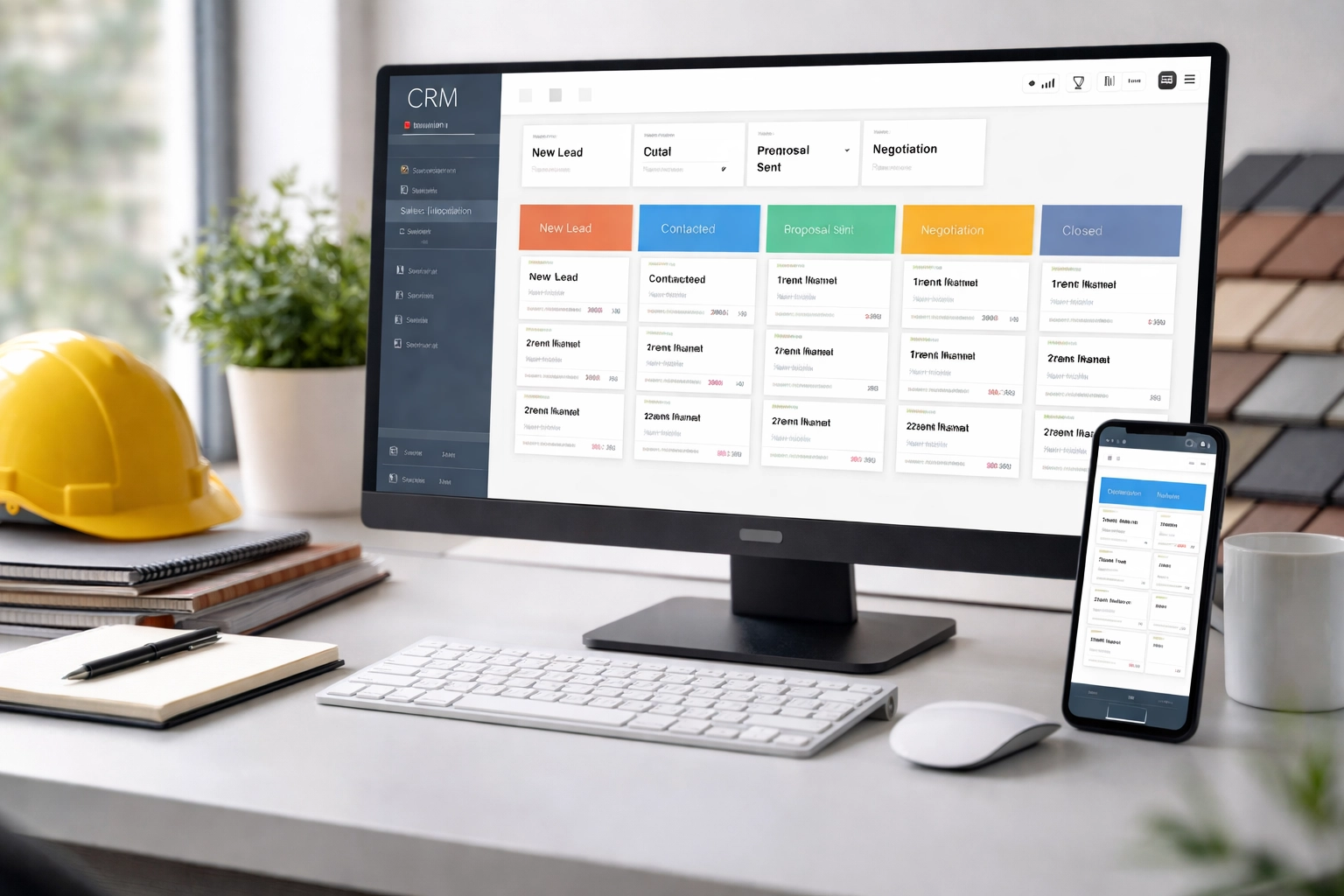
Your pipeline is your workout plan. Each stage represents a specific phase of the sales process, and every lead should move through them in order.
A basic roofing pipeline might look like this:
New Lead – Just came in, not yet contacted
Contacted – Initial call or text made
Inspection Scheduled – Appointment set
Inspected – Roof assessed, waiting on estimate
Estimate Sent – Proposal delivered
Follow-Up – Waiting on decision
Sold – Contract signed, deposit collected
Lost – Didn't close (with a reason tagged)
The key: Every stage needs a done definition. What has to be true before a lead moves to the next stage? If you can't answer that, your pipeline is just a wish list.
[OWNER NOTE]: Your close rate lives and dies in stages 5–7. If leads are piling up in "Estimate Sent" and never moving, that's where your sales process needs work, not more leads.

Step 3: Automate Your Follow-Ups (Your Built-In Spotter)
This is where most contractors leave money on the table.
Speed to lead matters. Studies show that responding within 5 minutes makes you 100x more likely to connect with a prospect than waiting 30 minutes. But you can't do that manually when you're on a roof.
What to automate:
Instant text/email when a new lead comes in ("Hey [Name], got your request! We'll call you within the hour.")
Task creation for your sales rep with a due time (not just a due date)
Follow-up sequences for leads that go quiet (Day 2, Day 5, Day 10 bump messages)
Reminder notifications when a lead has been sitting in a stage too long
The mindset shift: Automation isn't "impersonal." It's consistent. Your leads don't care if a robot sent the first text: they care that someone responded.
[OPS NOTE]: Set up a "stale lead" alert. If a lead sits in any stage for more than 48 hours without activity, the CRM should flag it and notify the owner or sales manager.
Step 4: Assign Ownership (No Orphan Leads)
Every lead needs an owner. Period.
If a lead comes in and sits in a general queue, it's everyone's job: which means it's no one's job. Your CRM should automatically assign leads based on:
Round-robin (rotate evenly across reps)
Territory (assign by zip code or region)
Lead source (certain reps handle certain channels)
Once assigned, that rep is accountable. The CRM should track:
How fast they responded
How many touches they made
Whether the lead moved forward or stalled
[OWNER NOTE]: You can't coach what you can't see. Lead assignment + activity tracking gives you the data to have real conversations with your sales team: not guesses.
Step 5: Enable Mobile Access (Sales Happens in the Field)
Your sales reps aren't sitting at desks. They're on roofs, in trucks, and standing in driveways.
Your roofing CRM needs a mobile app that lets them:
View lead details and history before a call
Update notes and photos from the job site
Send estimates and proposals on the spot
Schedule the next appointment before they leave
If your team has to wait until they're "back at the office" to update the CRM, they won't do it. And then you're back to leads falling through the cracks.
[OPS NOTE]: Make mobile CRM usage a non-negotiable. If it's not updated in the field, it doesn't count. Build this into your team's daily rhythm.

Step 6: Create Visibility (The Scoreboard)
You need a dashboard that answers three questions at a glance:
How many leads came in this week?
Where are they in the pipeline?
Who's working them and what's the next step?
If you can't answer those questions in 10 seconds, your CRM isn't set up right.
Key metrics to track:
Speed to lead (average time to first contact)
Set rate (leads contacted → inspections scheduled)
Close rate (estimates sent → sold)
Pipeline value (total revenue sitting in active stages)
[OWNER NOTE]: Review your pipeline in a weekly meeting. Make it short (15 minutes max), and focus on stuck deals and next actions. This is how you coach your team without micromanaging.
Common CRM Setup Mistakes (And How to Avoid Them)
Even contractors who invest in a CRM often trip over the same mistakes:
Mistake | The Fix |
Too many pipeline stages | Keep it simple. 6–8 stages max. |
No required fields | Make name, phone, address, and lead source mandatory. |
Manual follow-ups only | Automate the first touch and the bump sequences. |
No stale lead alerts | Set a 48-hour flag for leads without activity. |
Desktop-only usage | Choose a CRM with a solid mobile app. |
No accountability | Assign every lead and track rep activity. |
The Bottom Line: Systems Create Freedom
You got into roofing to build something: not to babysit a spreadsheet or chase down your team for updates.
A properly configured contractor CRM setup is your safety net. It catches leads when you're busy, reminds your team when follow-ups are due, and gives you visibility into the entire sales engine without having to micromanage.
It's not about working harder. It's about building a system that works even when you're not watching.
Ready to stop losing leads and start building a sales engine that runs without you?
Book a Business Health Check with The Organized Contractor Co. We'll diagnose where your leads are leaking, map out your CRM workflow, and give you a 30-day action plan to plug the gaps.
Book Your Business Health Check